ReachOut AI offers 24/7 emotional support for students ages 8-18, ensuring safety and human oversight while helping them process feelings and stress in a judgment-free environment.
Gaggle's founder, Jeff Patterson, emphasizes the importance of combining technology and human expertise to ensure student safety and mental health in digital spaces.
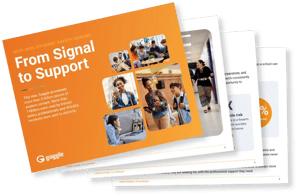
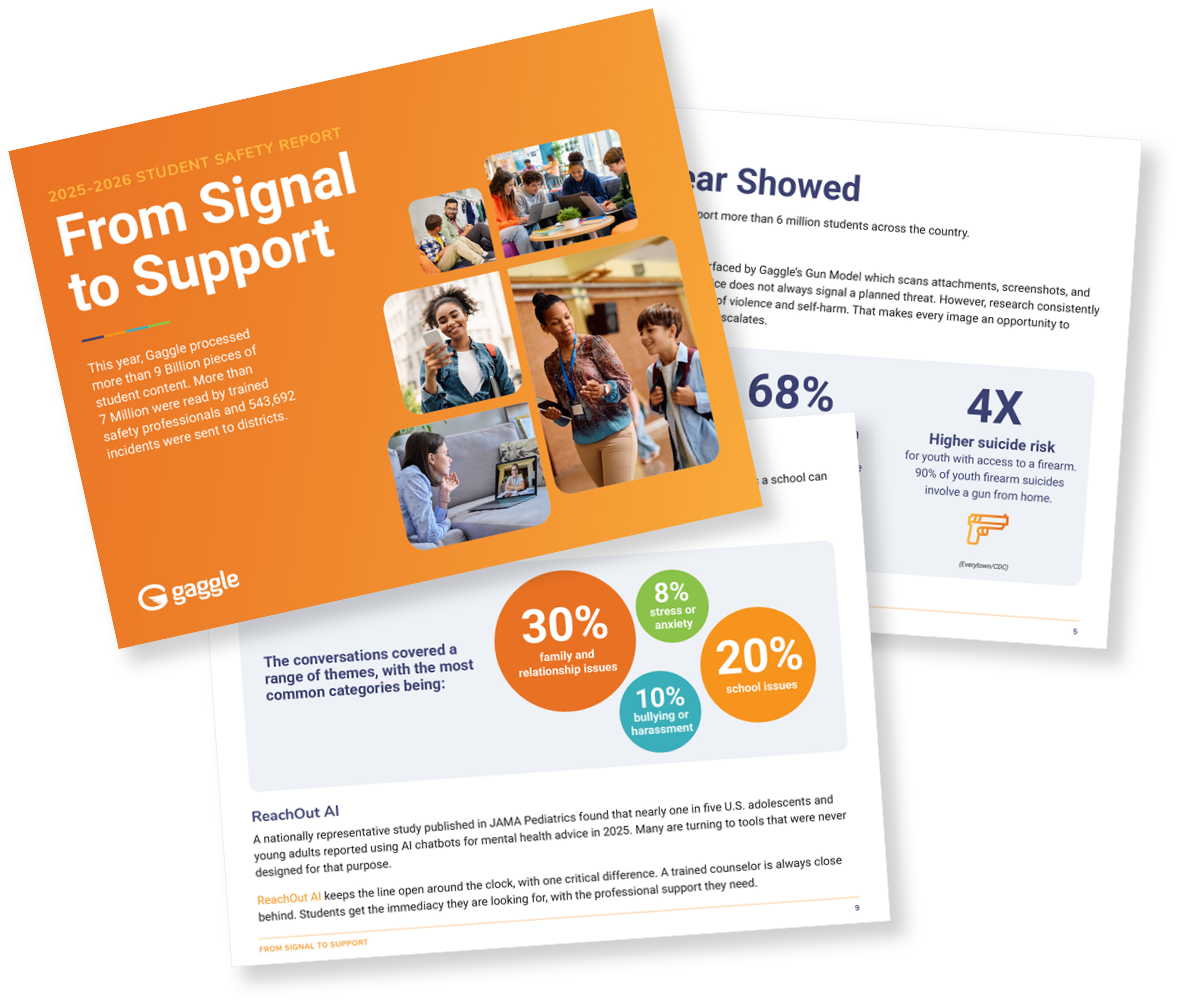
From Signal to Support 2025–2026 Student Safety Report
This year's report reveals emerging student safety trends, growing AI-related concerns, and the industry's first third-party independent validation of a K–12 safety monitoring platform.
An alert only helps a student if the people who receive it trust it enough to act. This year, we recalibrated what reaches a district.
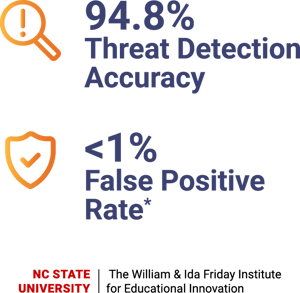
We commissioned The William & Ida Friday Institute for Educational Innovation at NC State University (The Friday Institute), to examine our classification process and test it against real-world scenarios.
*The final evaluation run did not include safe content, so the false positive rate for that run was N/A. Across two previous runs that did include safe content, 355 safe items total where 3 were incorrectly flagged, yielding an overall false positive rate of 0.84%. All three were QCON classifications; no safe content was escalated to PSS tier.
While an increase in alerts can sound alarming, we view each alert as an opportunity to identify and support a student before a situation escalates. The alerts we receive through Web Activity Monitoring reflect greater visibility into student wellbeing, not necessarily an increase in crises among students. Our priority is ensuring every potential student safety concern receives an appropriate and timely review.
Ezekiel Pittmon, M.ED
Coordinator Safe & Supportive Schools Austin ISD
See What’s Changing in Student Safety
Discover the data, insights, and real-world findings helping school leaders better understand risks, strengthen prevention efforts, and support student well-being.
Download the report to see what’s changing—and what schools can do next.